Showing posts with label equipment. Show all posts

Wednesday, February 8, 2023

Essential Gold Prospecting Equipment

Gold prospecting is the process of searching for gold deposits in the earth using various tools and equipment. The following is a list of essential equipment needed for gold prospecting:

  • Panning kit - A panning kit is a must-have tool for gold prospecting. It consists of a pan, a sieve, and a scoop. The pan is used to wash soil and gravel to separate the gold from other minerals.

  • Metal detector - A metal detector is used to locate gold deposits below the surface of the earth. A good quality metal detector will make the process of gold prospecting much easier and more efficient.

  • Shovel and pick - A shovel and pick are used to dig up soil and rocks in search of gold deposits.

  • Classifier - A classifier is a device used to separate larger rocks and debris from soil and gravel. This helps to minimize the amount of material that needs to be washed in the pan.

  • Crevice tool - A crevice tool is a narrow, pointed tool used to probe crevices and cracks in rocks for gold deposits.

  • Dredge - A dredge is a powered underwater vacuum that is used to extract gold from rivers and streams.

  • Highbanker - A highbanker is a large sluice box that is used to wash soil and gravel in search of gold deposits.

  • Sluice box - A sluice box is a long, narrow box that is used to separate gold from soil and gravel. The material is washed through the sluice box and the gold is trapped in ridges or "riffles" along the bottom of the box.

In conclusion, these are the essential tools and equipment needed for gold prospecting. It is important to note that some states and countries may have regulations regarding the use of certain equipment, so it is important to research and understand the regulations in your area before starting your gold prospecting adventure.

Saturday, January 21, 2023

How to build and use a sluice for Gold Prospecting

Building a sluice for gold prospecting involves the following steps:

  1. Gather materials: You will need wood, screws, nails, and mesh (such as hardware cloth or expanded metal) to build the sluice.
  2. Cut the wood: Cut the wood to the desired length for the sluice. The standard length is around 3 feet, but it can be longer or shorter depending on your preference.
  3. Assemble the frame: Use screws and nails to assemble the frame of the sluice. The frame should have a slight incline to allow the water to flow through it.
  4. Attach the mesh: Use screws to attach the mesh to the bottom of the sluice. This will act as a filter to trap the gold.
  5. Add riffles: Riffles are small ridges or barriers that are placed in the sluice to trap the gold. They can be made out of wood or plastic and are typically spaced about every 2 inches.

Using a sluice for gold prospecting involves the following steps:

  1. Find a good spot: Look for a spot where there is a natural flow of water, such as a stream or river. This will provide the necessary water to wash the material through the sluice.
  2. Dig up material: Dig up material from the stream bed or river bank and place it in the sluice.
  3. Add water: Use a hose or bucket to add water to the sluice. The water will wash the material through the sluice and trap the gold in the riffles.
  4. Check the riffles: After a few minutes, check the riffles for any gold that may have been trapped. Use a small brush or tweezers to remove any gold that you find.
  5. Repeat: Repeat the process as necessary to find as much gold as possible.

Note: It's important to check the laws and regulations of your area before prospecting for gold. Some areas may require a permit or have specific restrictions on where you can prospect.

Wednesday, February 22, 2017

My Favorite Gold Pans


For most prospectors, the most essential tool is the gold pan. Every year, somebody is designing a new pan with a new color, new riffle design, or even entirely new shapes. I must admit, that I have quite a collection mounting. At the end of the day, I've found that I have 3 go to pans that I use over and over. To be honest, one pan isn't always enough. You may want a larger pan with big riffles to quickly test a spot. Some pans have large bottoms others have small. A lot of miners like to have a smaller pan for clean-up. Here are my 3 favorites:

15" Garret Super Sluice

This 15" pan is ideal for panning gold, silver, or precious gems with its reliable, rapid gold recovery system. Its deep, wide riffles (measuring at 1/2" deep) are effective for retaining fine material as well as larger nuggets. Made from durable plastic. Works wet or dry. The forest green color provides contrast and will therefore reveal gold better. 

This was one of my first pans and I used it to teach myself how to pan. The HUGE bottom makes it easy to backwash and rinse back the black sands. The super deep riffles help keep more of the gold when your washing out material. The biggest downside is the fact is it's a very durable and heavy pan, so if your wrists get tired easily, you may have to take frequent breaks. Lol. Still number #1 pan that can be used for just about any purpose.


Copper 10" Pan
Copper 10" Pan

Authentic, spun copper gold pan. These pans are made from solid copper sheet right here in the USA. 10" diameter, heavy duty solid spun copper gold pan. Beautiful decorative piece, add some engraving for a handsome award or trophy or go panning for gold. This is real copper and will patina with time, about as authentic as it gets. The inside bottom diameter is just over 5.5" and the pan is roughly 1.75" deep.

After a couple of years panning experience and testing many other different pans, I decided to buy a real metal pan out of nostalgia. The first thing I had to was remove the manufacturing grease coating the pan with a good detergent. After that I decided to age the pan, using vinegar water. It turned out a beautiful beige/brown color. One thing you will notice is this pan does not contain any riffles. It's definitely for advanced panners, who are sure of their skills. As a general rule, you have to go slower, and wash out less material between steps. But, I tell you, there is nothing like holding a quality metal pan. The weight and balance is perfect. Now, to be honest, this is not a pan you would normally take out to pan a creek (unless it's all you have). But, I find it perfect for sitting down and doing my clean-ups, or just relaxing on a beautiful day panning out a bag of paydirt.


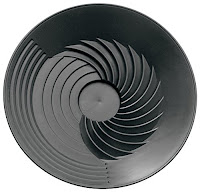
10" Black Turbo Pan
10" Black Turbo Pan


The turbopan was invented to quickly & easily pan gold. it will reduce your panning time by at least 50%, due to the "Vortex action" & the amount of riffles in the pan. it also acts like a sluice box, but in pan form. No other gold pan is faster!

I was skeptical, I admit it. I also have the LARGE version, which I like as well. But this pan is amazing, fast, and gets the gold.  Besides the copper pan for nostalgia, this is by far my favorite clean-up pan. It's super light weight, holds plenty of material, and the deep center concentrates and keeps the gold in the pan. 


The Allure of Gold Prospecting: A Timeless Hobby for the Adventurous

The Allure of Gold Prospecting: A Timeless Hobby for the Adventurous For centuries, the thrill of the hunt has been at the heart of human en...